
What is Cold Cap Therapy?
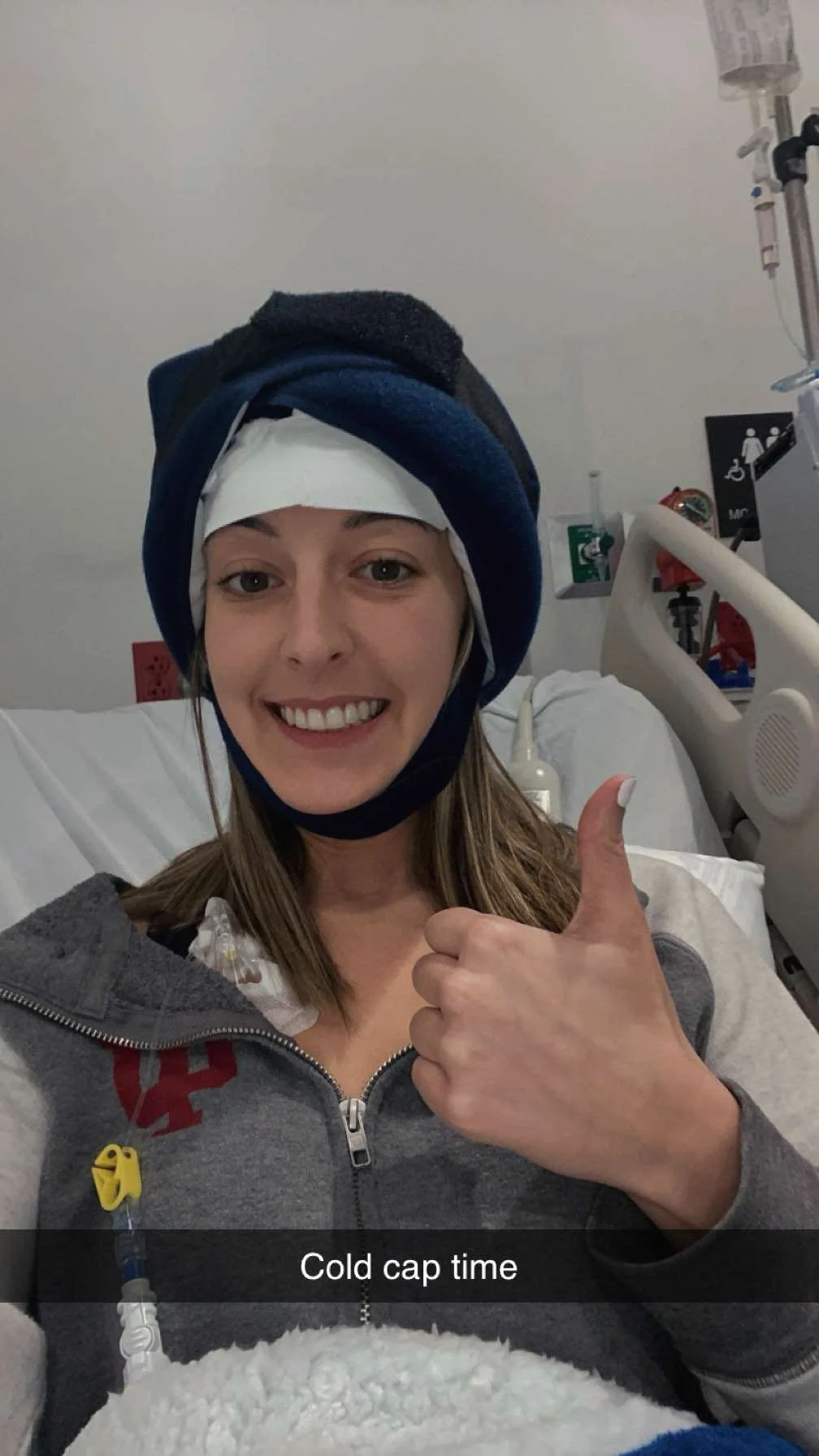
How it Works
Cold cap therapy minimizes chemotherapy-induced hair loss by the application of precisely cooled caps to the scalp. This process begins just prior to each chemotherapy infusion and continues until hours following each infusion. Cold cap therapy is thought to prevent hair loss by: (1) reducing blood flow to the hair follicles, therefore minimizing their exposure to the chemotherapy drugs, and (2) reducing metabolic activity, therefore minimizing the absorption of the chemotherapy drugs.
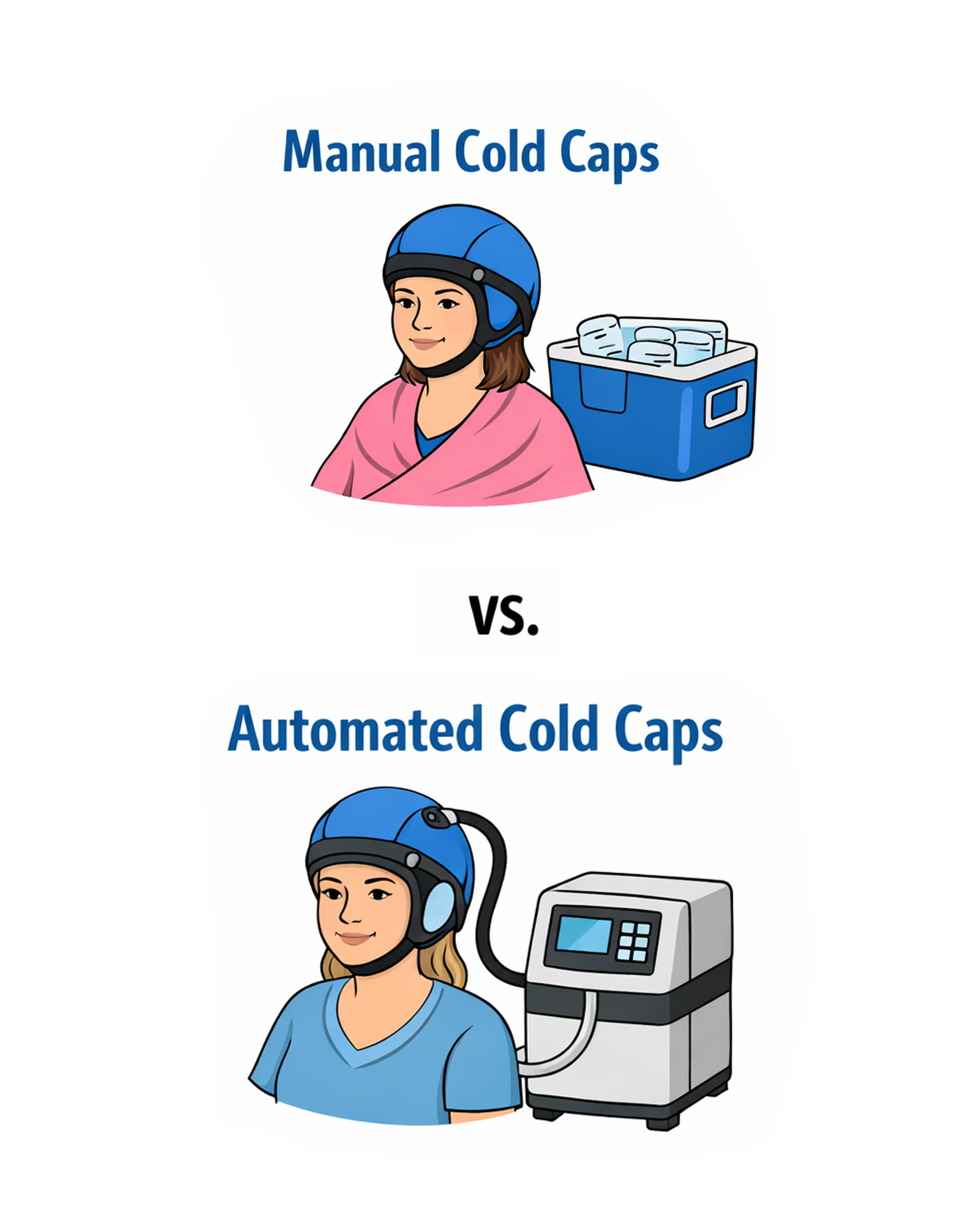
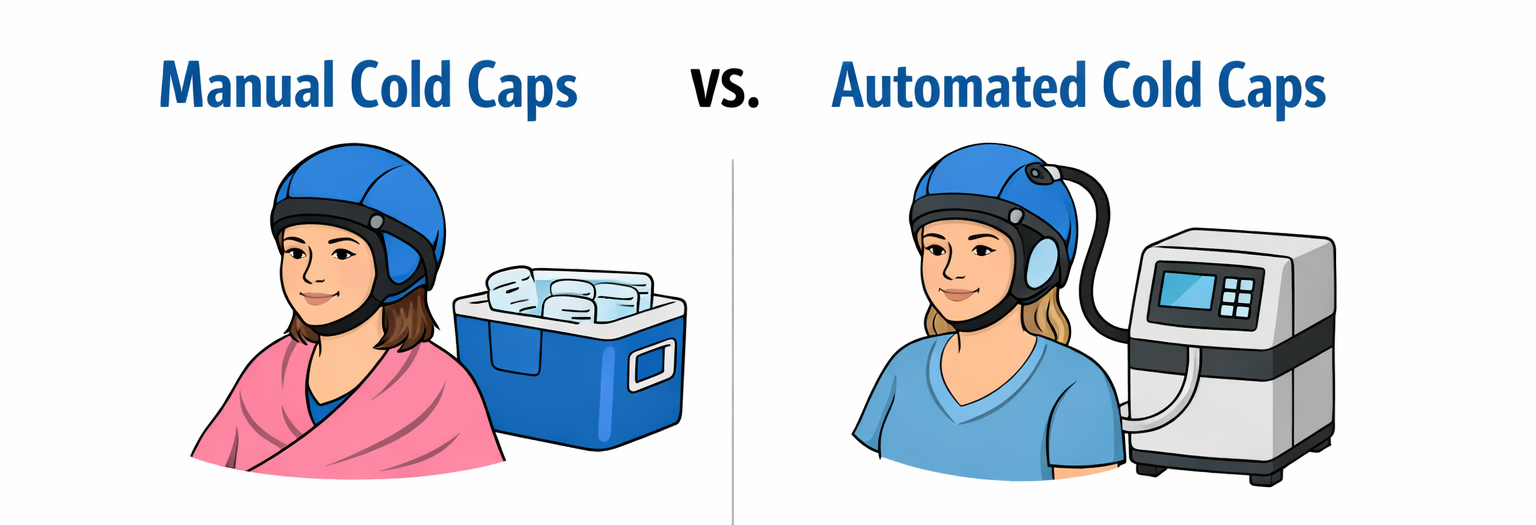
There are two basic approaches to cold cap therapy: manual cold capping and automated cold capping.
Manual cold caps must be swapped out periodically during treatment to ensure precise cooling of the scalp. A source of refrigeration is required to store replacement caps and to keep them cold during the process. This is usually dry ice in a cooler, though some infusion centers have dedicated freezers available to patients.
Automated cold caps include self-contained refrigeration units that continuously cool the cap during treatment. This approach does not require cap changes, access to freezers, or dry ice. Although, this option is not available to every area.
Cold Cap Therapy Options
Cold Cap Rental Companies
Manual
Penguin Cold Caps (recommended)
Arctic Cold Caps
Polar Cold Caps
Wishcaps
Warrior Caps
Automated
Paxman Scalp Cooling Systems
DigniCap
How Much Does Cold Cap Therapy Cost?
Equipment Rental
Cold cap therapy equipment rental is typically $400-$500/month. However, the pricing varies depending on which company the equipment is rented from. The number of months the equipment must be rented depends on the specific cancer diagnosis and prescribed chemotherapy regimen.
Dry Ice
The price of dry ice greatly depends on the dry ice supplier, the prescribed chemotherapy regimen, and the length of a single round of chemotherapy treatment. Dry ice pricing can be expected to be around $200-$300 per treatment. Please note, dry ice is only needed for manual cold caps.
Below are a few videos that help explain the cold capping process in more detail.

Washing: Wash hair in cold water. Only wash hair when necessary. Try going as long as you can between hair washes. Use a shampoo/conditioner that is sulfate and paraben free. You may consider using castor & rosemary oil on your hair the night before or hours before washing, as this has shown to benefit hair health on some users.
Styling: It is recommended to use a wide-tooth comb, starting at the ends and working your way up to the scalp. Avoid heat tools - blow dryers, straighteners, curling irons. If you must use a blow dryer, use on the coolest setting. Avoid tight hairstyles. It is best to wear your hair down. If must put your hair up, secure it loosely (consider using soft scrunchies). It is also recommended to avoid wearing tight hats, as these can rub against your scalp and cause additional shedding. Also, avoid using chemicals on your hair that can cause dryness, breakage, and additional shedding.
Sleeping: It is recommended to sleep with a satin or silk pillowcase to reduce shedding.
John 14:27 (NIV) “Peace I leave with you; my peace I give you. I do not give to you as the world gives. Do not let your hearts be troubled and do not be afraid.”